Protect Your Herd’s Health and Milk Yield from Heat Stress
Published: 6/26/2026
Protect Your Herd’s Health and Milk Yield from Heat Stress
The transition into summer and the first heatwaves bring one of the greatest challenges to modern dairy farming. In high-yielding dairy cows, heat stress begins at temperatures as low as 22ºC, which quickly leads to a drop in milk production, poorer reproductive performance, and an increase in health issues. With appropriate measures, premium care, and the support of modern technologies like MooHero, we can effectively mitigate the impact of summer heat and prevent long-term consequences on farm economics.
Heat Stress - More Than Just Summer Heat
Dairy cows thrive best in a thermal comfort zone between 5 and 22 °C. Due to the intense metabolism and digestion required for high milk production, a cow naturally generates a massive amount of body heat. Therefore, heat stress is not solely caused by high air temperatures; it occurs when an animal can no longer effectively dissipate this excess heat due to a combination of external heat and high ambient humidity.
We measure this environmental load using the Temperature-Humidity Index (THI), which helps us differentiate between various levels of stress—ranging from mild stress, where the first symptoms like reduced rumination and activity appear, to severe and life-threatening stress, where all of the animal's natural cooling mechanisms fail.
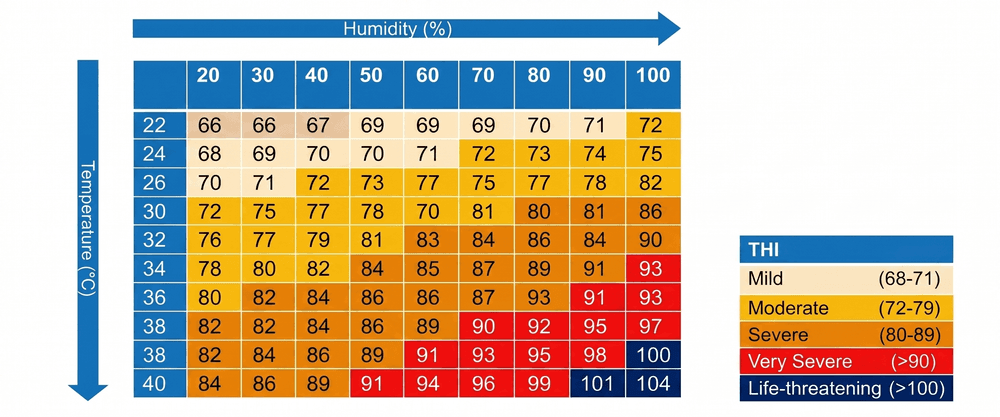
The critical comfort threshold for dairy cows ends at a THI value of 68, which roughly equates to a temperature of 22 °C coupled with elevated humidity. In practice, this means heat stress can occur on a mild summer morning if the barn is humid and lacks proper airflow. At outside temperatures of 28ºC or higher, cows inevitably experience heat stress, even if the humidity in the barn is extremely low. When temperature and humidity exceed the critical threshold, the cow must trigger natural defense mechanisms for cooling, which sets off a chain reaction of negative physiological changes in her body.
Signs and Consequences of Heat Stress
The struggle with heat quickly manifests in the animals' daily habits and health. Rapid breathing, decreased lying times, crowding around water troughs, electrolyte loss (due to increased salivation, sweating, and urination), and a drop in feed intake, rumination, and activity are the first warning signs that are easily noticed in the herd. These physiological strains quickly translate into severe consequences, such as:
- a drop in immunity and an increased risk of mastitis, metabolic diseases, and other illnesses
- a milk production drop of 20 to 25% (often 4 liters or more per day)
- decreased milk quality due to altered milk composition and elevated somatic cell counts (SCC)
- reproductive issues, including silent heats, higher embryonic mortality, and lower conception rates
Mitigating and Detecting Heat Stress
To effectively mitigate heat stress, the first step must always be adapting the animals' environment, nutrition, and management. This includes providing shade, active ventilation, and cooling in barns (using fans and water sprinklers), ensuring constant access to ample clean drinking water, maintaining excellent hygiene, and shifting feeding times to the cooler parts of the day.
While these physical measures directly help cows cope with the heat, modern systems for monitoring animal behavior and welfare are incredibly useful for detecting the first, invisible signs of stress. With their help, we can spot deviations early on and take appropriate action based on this data before irreversible damage occurs in the herd.
Modern Technologies as a Framework for Monitoring Animal Health and Welfare
The MooHero smart system represents an indispensable tool for monitoring animal behavior and well-being. By providing reliable and precise data on rumination and activity, it allows you to maintain complete control over what is happening in the barn and respond to changes promptly, especially during the demanding summer months.
The key benefits of using MooHero smart collars for daily and seasonal challenges include:
- monitoring individual animal behavior: The system continuously tracks the behavioral patterns of every single cow in the barn or on pasture, 24 hours a day, 365 days a year. This provides you with an accurate and constant overview of her baseline well-being, backed by reliable data at all times.
- behavioral deviation alarms: If a critical drop in a specific cow's rumination is detected, an alarm is triggered immediately. Because a drop in rumination can stem from a wide range of causes, it may reflect the impact of heat stress, but it frequently points to an individual health issue (such as the onset of an infection, mastitis, or acidosis). The system directs your attention exactly to the cow that needs it, allowing you to reliably diagnose the root cause upon examination
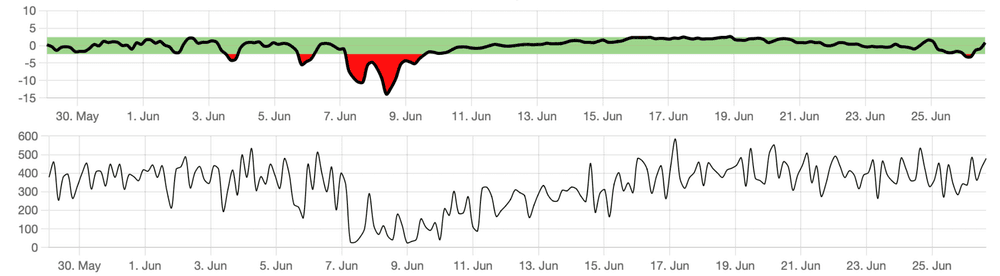
Image: Rumination dynamics showing a drop and subsequent stabilization
- monitoring the herd's rumination average: For a broader picture, the application provides a visual overview of the herd's average rumination. A drop in this metric is a key indicator of an issue affecting the majority of the animals simultaneously. In summer, this often confirms the presence of heat stress due to a poor microclimate. Throughout the year, this feature reliably alerts you to other herd-wide factors, such as disease outbreaks, issues with ration changes, or stress from moving to a new paddock
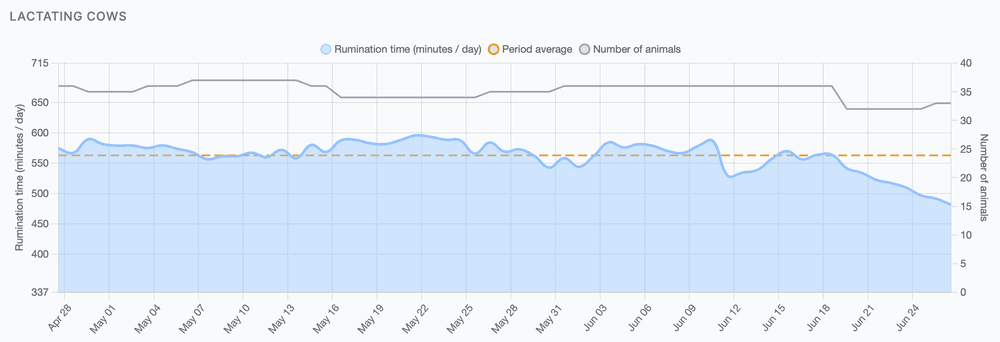
Image: A noticeable drop in average rumination time in lactating cow
- evaluating intervention effectiveness: The technology proves its true value when you take action. Whether you decide to turn on the fans, start the sprinklers, adjust the feed ration, or begin veterinary therapy—the rumination graphs quickly confirm the success of your measures. If the curve turns upwards and stabilizes after your intervention, it is clear proof that the situation is improving
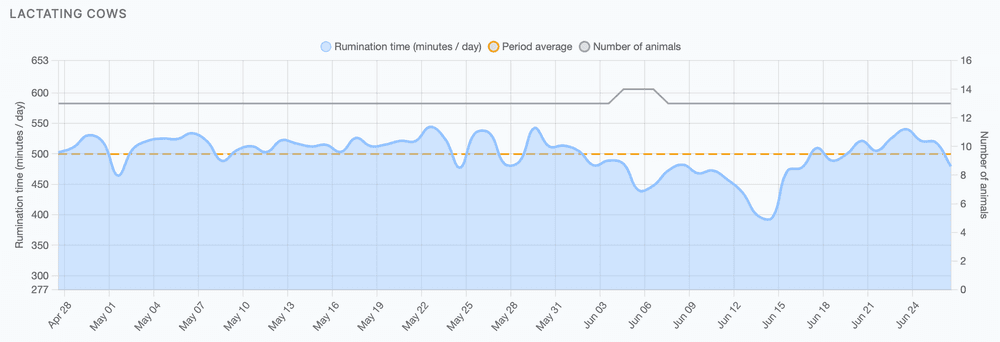
Image: Stabilization of average rumination time within the group
A Stress-Free Summer for Cows and Breeders
The summer months demand a great deal of flexibility from every dairy farmer, as high temperatures can quickly disrupt the optimal performance and balance of the herd. Although we cannot escape heatwaves, today we have the tools and knowledge to successfully mitigate their impact on our animals. Data on rumination and activity enables faster intervention and helps maintain the health, reproductive performance, and milk yield of the herd, even on the hottest and most exhausting days.
Secure actionable data, simplify your barn management, and protect the health and productivity of your herd. Get in touch with us to see how MooHero can assist you in your daily operations.
Author: Tadej Sajnkar